Strickmich! Club 2017: BilumStrickmich! Club 2017: Bilum

|
|
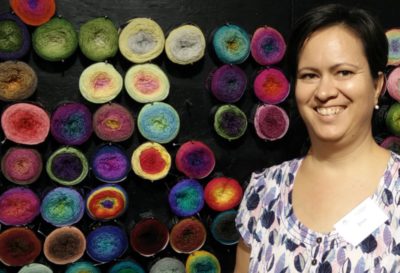
… und hier ist sie, die dritte Färberin für den Strickmich! Club 2017: Zsofi Csongor mit ihren irre schönen handgefärbten Bilum-Farbverlaufsgarnen, die wirklich etwas ganz Besonderes sind – denn Garne mit so hübschen Farbverläufen sind für Handfärber sehr aufwändig herzustellen. „Ich habe ein Foto von einem Garn mit langem Verlauf gesehen und das hat mir total gut gefallen“, erzählt Zsofi, „da habe ich angefangen zu experimentieren, wie ich das hinkriegen könnte. Es hat zwar lange gedauert, aber jetzt habe ich meine eigene Methode um die langen Verläufe, wo die Farben wirklich langsam und sanft ineinander übergehen, zu färben.“ Als ich Zsofis Garne beim Edinyarnfest zum ersten Mal live gesehen habe, war ich sofort hin und weg – denn Farbverlaufsgarne in so einer tollen Qualität, mit so schönen Übergängen hatte ich noch nie gesehen. Dass wir so ein Garn jetzt im Strickmich! Club 2017 anbieten können, finde ich darum sensationell. Und ich freue mich schon sehr aufs Designen damit!
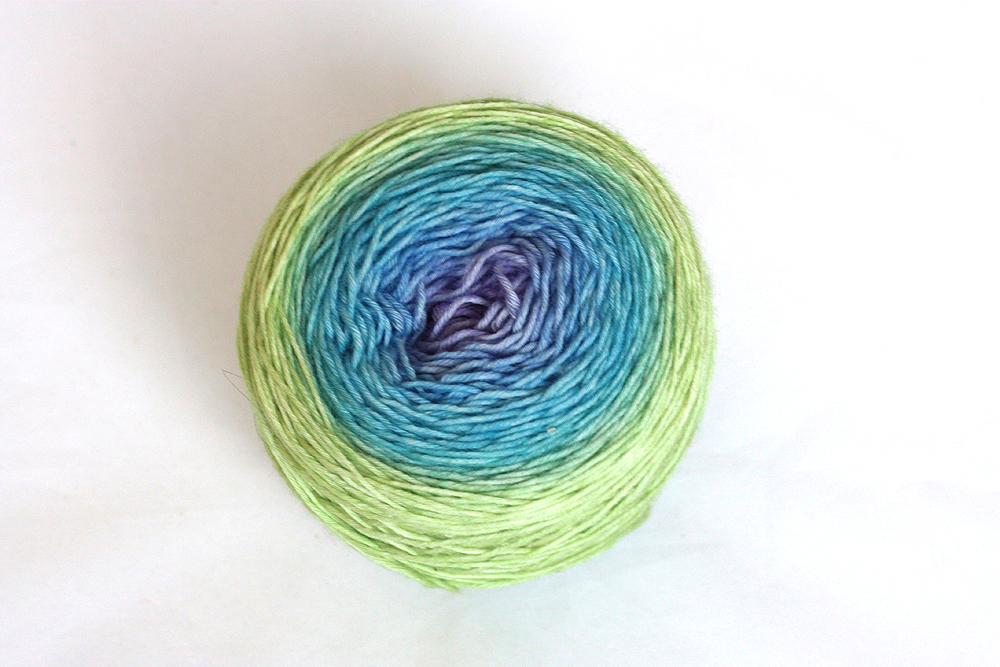
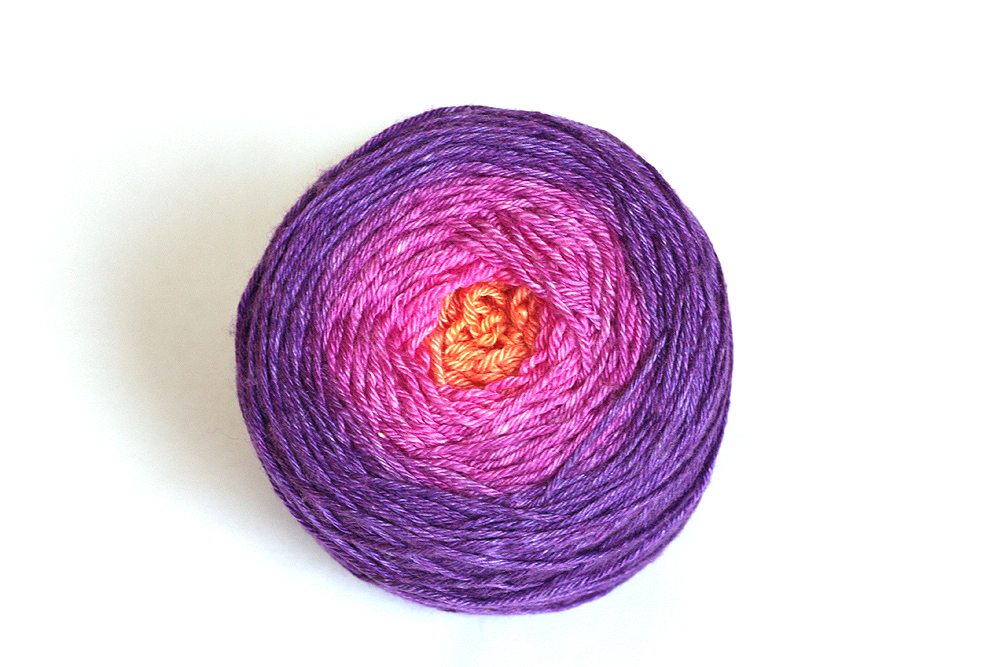
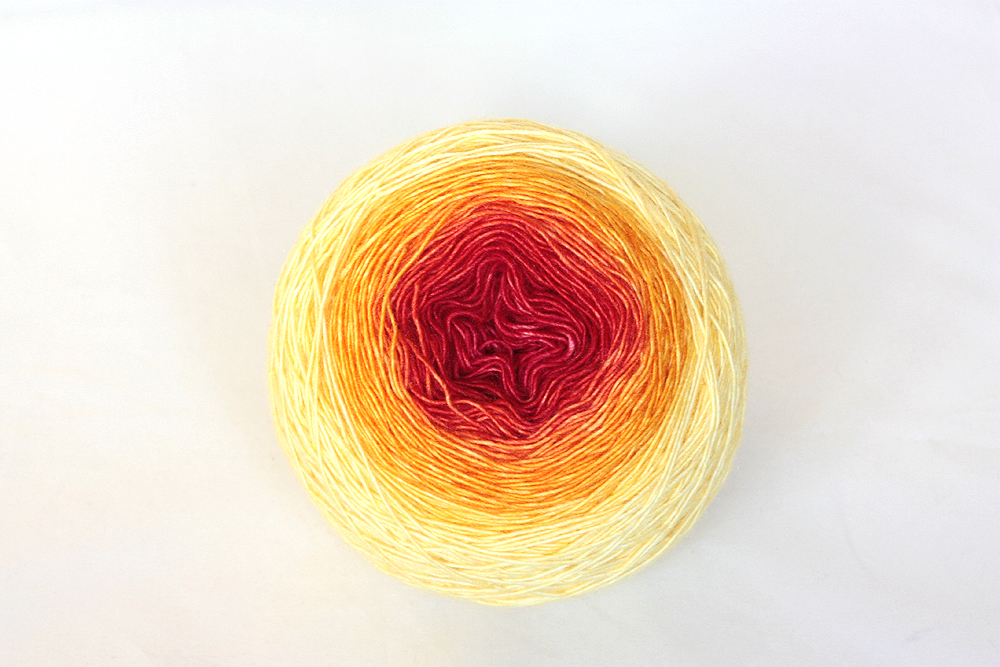
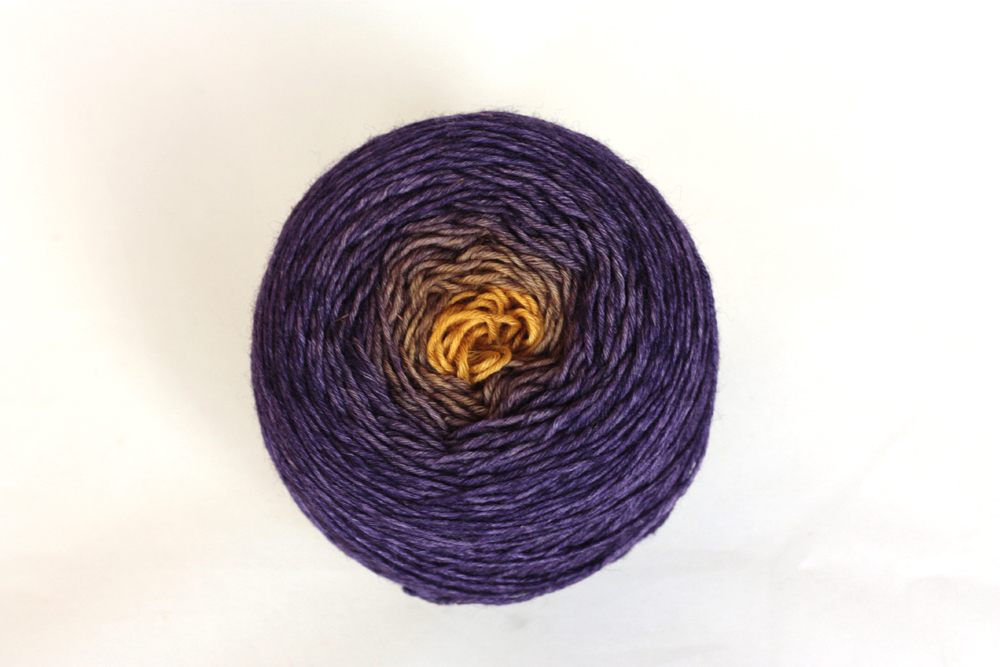
Oft sieht man Garne mit Farbverläufen aus Baumwolle mit Poly-Beimischung, und meistens werden sie nicht per Hand gefärbt, sondern geknotet – mehrere Einzelfäden in einer Farbe laufen nebeneinander her, und irgendwann wird einer abgeschnitten und ein neuer in einer anderen Farbe darangeknotet, dann noch einer und noch einer. Solche Garne sind nicht verzwirnt (also gedreht), sondern gefacht, das heißt, die Fäden liegen einzeln nebeneinander. Die Bilum-Garne dagegen sind reine, luxuriöse Naturfasergarne, die fertig gesponnen sind und dann in einem ausgeklügelten Verfahren ihre Farbverläufe bekommen.
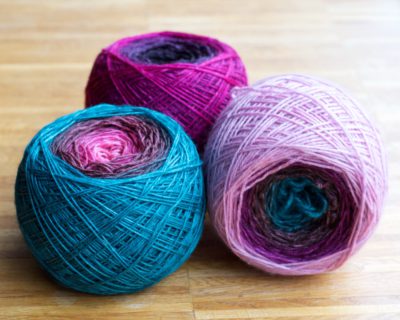
Meine Bilum-Beute aus Edinburgh
Zsofi lebt und arbeitet in Budapest, Ungarn und fing vor fünf Jahren mit dem Wollefärben an. „Ich habe mich schon immer für kreative Sachen interessiert, als Kind habe ich mich unter anderem mit Textilmalerei, Seidenmalerei, Nähen, Stricken und so weiter beschäftigt“, erzählt Zsofi. „Und als ich mit meinem dritten Kind zuhause war und etwas Zeit hatte, stieß ich im Internet auf handgefärbte Wolle. Das wollte ich sofort auch ausprobieren!“ Sie experimentierte mit Lebensmittelfarben, stieg dann aber auf Säurefarben um, weil sich die Farben damit besser mischen ließen. „Es ist mir wichtig, dass ich nur Naturgarne färbe, und die müssen Spitzenqualität sein“, sagt sie. Zsofi ist erklärter Fan von Luxusfasern, und am liebsten strickt sie mit ihren Qualitäten Muli (eine Seide-Kamelhaar-Mischung) und Muruk (Mischung aus Yak und Seide), „besonders gern in Rot, das war schon immer meine Lieblingsfarbe.“ Wenn ihre Kinder ihr die Zeit dafür lassen, ist sie auch gerne in der Küche kreativ oder probiert neue Handarbeitstechniken aus. Auch in Budapest ist Stricken Trend, sagt Zsofi: „Es gibt zahlreiche Wollshops hier bei uns und viele junge Leute stricken, und einige benutzen auch handgefärbte Garne dafür. Es macht mich immer froh, wenn ich meine Garne in der fertigen Form wiedersehe, das ist einfach toll!“
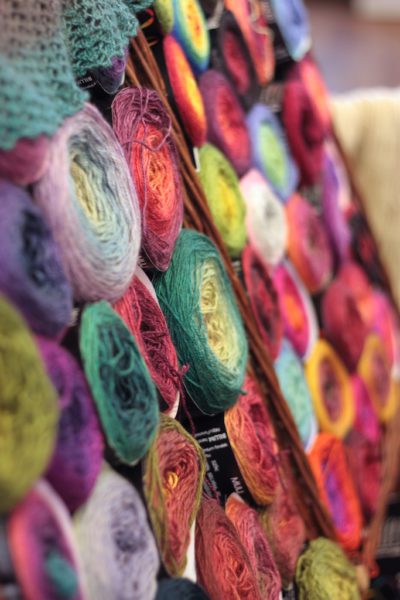
Ihre Garne bietet sie nicht nur in ihrem eigenen Web-Shop und auf Etsy an,
sondern auch auf Wollmärkten in Zürich, Hamburg, Edinburgh, Wien oder Berlin. Ob wir sie auch zum Anstrick-Event nach Damsdorf locken können? Wir werden sehen, ein bisschen Überraschung muss ja sein…
„Bilum“ ist übrigens die Bezeichnung für eine Tasche, die auf Papua-Neuguinea in Nadelbindetechnik hergestellt und dort überall benutzt wird. Zsofi hat anderthalb Jahre dort gelebt und darum diesen Namen für Ihre Marke gewählt. Auch die Garne selbst tragen Namen aus der „Tok Pisin“-Sprache: „Pukpuk“ heißt Krokodil, „Pikinini“ Kind und so weiter.
|
|
|
… and here she is, our third dyer for Strickmich! Club 2017: Zsofi Csongor and her insanely beautiful handdyed gradient Bilum yarns. They are truly special, as producing yarns with long color changes by hand is a very elaborate process. „When I saw a picture of such a yarn I instantly fell in love with it“, Zsofi says, „so I started experimenting. It took me quite a long time to figure out how to do it, but I did develop my own method to dye long, harmonious color changes.“ When I saw Zsofis yarns at Edinyarnfest, I fell in love with them – I had never seen yarns like this on such beautiful yarn bases. Needless to say that I am especially happy that we will be able to have one of Zsofi’s creations in Strickmich! Club 2017. I am really looking forward to designing with it!
I had often seen yarns with long color changes in a cotton/acrylic blend, and they are usually made by having a number of threads in one color next to each other, and one after another is cut and joined with a thread in another color with a knot. These yarns are usually not plied. In contrast to that, Bilum yarns are readily spun luxurious yarns and they are dyed by hand using Zsofi’s very own method.
My Bilum yarns from Edinburgh
Zsofi lives and works in Budapest, Hungary and started dyeing yarn about five years ago. „I have always liked to work creatively with my hands, as a kid I loved painting textiles like silk, sewing, knitting and so forth“, she says. „When I stayed home with my third child, I found I had time to try something new. I found handdyed yarns on the internet and immediately wanted to try dyeing wool myself.“ She started out with food colors but quickly changed to acid dyes as they can be mixed more easily to achieve the desired colorway. „To me it is extremely important to use all-natural yarn bases, and they have to be the highest quality“, Zsofi says. She is a declared fan of luxurious fibers and loves to knit with her „Muli“ (a silk-and-camel blend) and „Muruk“ (yak and silk) yarns. „My favorite color is red, always has been“, she says. When she finds the time, she likes to cook and bake and try out new crafting techniques. In Budapest, knitting has become a big trend: „There are lots of yarn shops here and many young people have taken up knitting, some of them with handdyed yarns. Sometimes I see my yarns knit up, and that’s just so wonderful!“
Zsofi offers her yarns in her online store, on Etsy, but also at wool festivals all over Europe, including Zurich, Hamburg, Edinburgh, Vienna and Berlin.
sondern auch auf Wollmärkten in Zürich, Hamburg, Edinburgh, Wien oder Berlin. Will we be able to lure her to come to our Cast-on Event here in Damsdorf? Let’s see, a little surprise shall remain…
P. S. If you were asking yourself what „Bilum“ means – it is a traditional crafted bag from Papua New Guinea, where Zsofi has lived for one and a half years, so she chose this name for her brand. The yarns themselves also have words from the „Tok Pisin“-language spoken there as their namas: „Pukpuk“ means crocodile, „Pikinini“ means child and so on.