
Strickmich! Club 2020: Alte Künste
In dieser Serie von Blogposts stellen wir die Färberinnen vor, die die Garne für den Strickmich! Club 2020 beisteuern.
Der Strickmich! Club ist ein Abo für vier neue Strickanleitungen von Martina Behm plus passendes, exklusiv gefärbtes Garn. Die Anmeldung für das Club-Jahr 2020 beginnt im November auf www.strickmich-club.de.

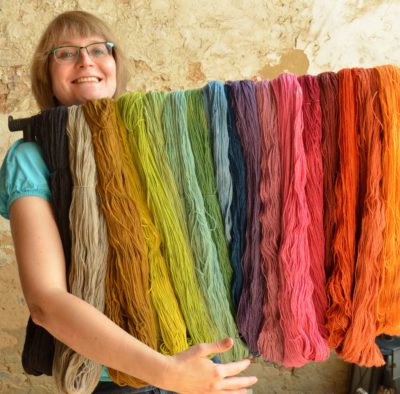
Margit mit ihren Garnen
Margit Hofmann bewegte sich jahrelang zwischen zwei Welten: Während der Woche war sie als Risikomanagerin einer internationalen Großbank in Frankfurt dafür zuständig, dass große Geldbeträge rechtzeitig da landeten, wo sie sollten. Am Wochenende tauschte sie ihr Business-Kostüm gegen eine Mittelalter-Robe und zeigte in Freilichtmuseen und Mittelaltermärkten den Besuchern, wie man Wolle spinnt und wie Naalbinding oder Brettchenweben funktioniert. Und über ihre Kontakte in diese Szene kam sie auf die Idee, schöne, moderne Garne mit Pflanzenfarben zu färben. „Auf den Märkten sah man oft nur grobe Dochtwolle, dabei haben die Menschen auch früher schon eher mit feinen Garnen gearbeitet“, sagt sie. Als die Bank, für die sie arbeitete, Margit ins Investment-Banking schicken wollte, hatte sie genug. „Es ist genau so gekommen, wie mein Doktorvater es mir prophezeit hatte: Ich musste mich zwischen Geld und Gewissen entscheiden.“
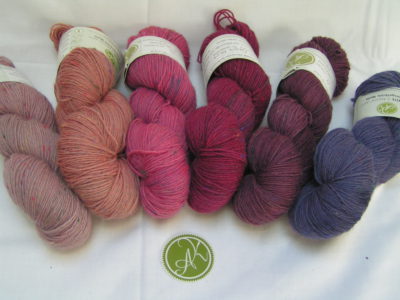
Garne in Beerentönen
Und so kam es, dass Dr. Margit Hofmann sich mit ihrer Idee selbständig machte: Pflanzengefärbte Garne für Handstrickerinnen, nach alten Rezepten, die sie selbst in alten Schriften recherchiert, ausprobiert und auf Haltbarkeit testet. „Meine Farben müssen immer wasch- und lichtecht sein. Dafür führe ich auch eigene Versuche durch“, sagt Margit. Manche Naturfarben sind anfällig dafür, sich unter Lichteinfluss zu zersetzen. Die Testfärbungen kommen für ein paar Wochen in ein sonniges Fenster, und anschließend wird mit Hilfe von standardisierten Karten bestimmt, ob sie dem Licht standhalten oder nicht. Und nur, wenn eine neue Färbung diese Tests besteht, wird sie Teil vom „Alte Künste“-Sortiment.
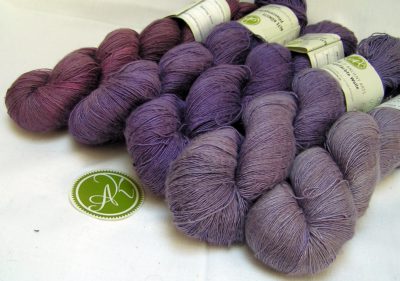
Variationen in Lila
„Mit Pflanzenfarben ist unglaublich viel möglich, und jede Farbe harmoniert mit jeder anderen“, sagt Margit. Wer den Regenbogen ihrer Garne sieht, staunt nicht schlecht: „Wir denken immer, dass die Leute nur Braun und Grau getragen haben, bevor die chemischen Farben erfunden wurden“, sagt Margit, „aber das stimmt nicht. Das Mittelalter war unglaublich bunt und die Kleidung zum Teil so intensiv gefärbt, dass es für unsere Augen sehr ungewohnt aussehen würde.“
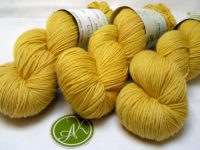
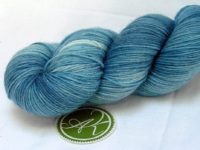
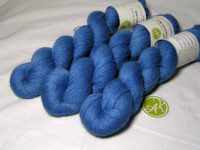
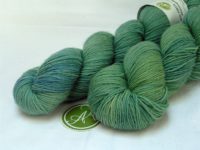
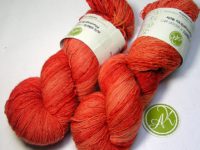
Mit Pflanzen zu färben ist immer aufwändiger und oft auch energieintensiver als das Färben mit Säurefarben, weil z. B. erst einmal ein Sud gekocht werden muss. „Aber für die Herstellung von chemischen Farben braucht man auch Energie“, sagt Margit. „Und Pflanzen sind – im Gegensatz zu Erdöl, das der Grundstoff für chemische Farben ist – ein nachwachsender Rohstoff.“ Sie hofft, mit ihren Garnen Begeisterung für pflanzlichen Färbungen zu wecken: „Die sind nämlich in Deutschland besonders schnell in Vergessenheit geraten – vielleicht weil wir das Land sind, in dem die Chemiefarben erfunden wurden.“
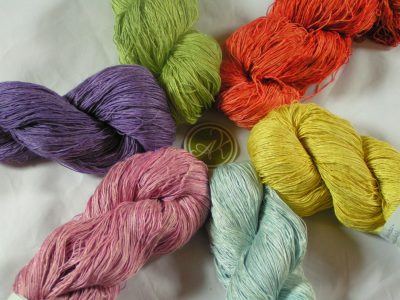
Buntes auf Seide
Margit färbt am liebsten Blautöne, und als Garnbasis mag sie reine Seide: „Obwohl die eigentlich extrem schwierig zu färben ist – die Töne werden immer etwas pastelliger als es bei Pflanzenfarben ohnehin der Fall ist. Aber da eine Knallfarbe hinzubekommen, ist ein tolles Erfolgserlebnis!“. Sie selbst strickt auch gerne und viel: „Im Moment habe ich eine Pulli- und Jackenphase, aber ich habe schon sehr viele Lace-Tücher aus Edelfasern gestrickt.“
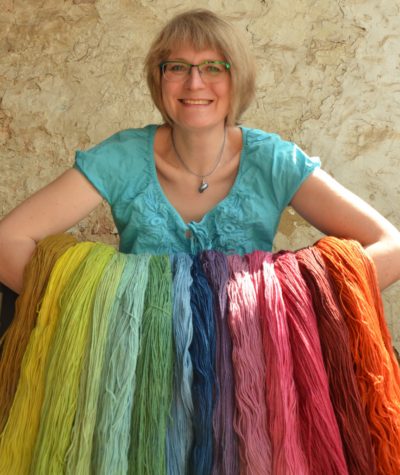
Ein ganzer Regenbogen!
Wir freuen uns sehr, dass Margit zugesagt hat, für den Strickmich! Club 2020 eine Färbung zu kreieren, die exklusiv unseren Clubmitgliedern vorbehalten sein wird. Wir sind gespannt!
In this series of blog posts we will introduce the dyers who are providing the yarns for Strickmich! Club 2020.
Strickmich! Club is a subscription for four new knitting patterns by Martina Behm plus matching, exclusively dyed yarn. Sign-ups for the club year of 2020 will start in November on
www.strickmich-club.de.
Margit and her yarns
Margit Hofmann used to be a wanderer between two very distinct worlds: During the week, she would work as a risk manager in an international bank in the city of Frankfurt, making sure that big chunks of money would be transferred correctly and on time. On the weekends, she would exchange her business attire with a medieval robe and perform at markets and festivals or open-air museums, showing visitors how spinning, weaving or naalbinding work. Being involved in this scene, Margit thought it might be a good idea to dye fine, modern yarns with plant-based dyes. „On the markets, I often saw chunky one-plies, but I knew that even in the medieval ages, people used finer yarns“, she said. When the bank she was working for wanted to transfer her to the investment banking branch, Margit drew a line: „It was the moment my PhD supervisor had warned me about – I had to make a decision between money and my conscience.“
Yarn in Berry Tones
And that’s how Dr. Margit Hofmann became a small-scale entrepreneur, dyeing yarns for hand-knitters with botanical and natural dyes, using old recipes she researches and tests herself. „I want my colors to be wash- and lightfast“, Margit said. Some natural dyes are prone to decomposing when exposed to sunlight. Margit places her samples in a sunny window for a couple of weeks and determines with standardized color cards whether they are affected by light or not. Only if a new color passes the test it will become part of the „Alte Künste“ („Ancient Arts“) palette.
Variations of Purple
„There are tons of possibilities with plant dyes, there’s a great harmony of colors and you can combine any two of them“, Margit said. She dyes a whole rainbow of saturated colors – not what one would expect when hearing „plant dyes“. „We always think that people in former times only wore brown and grey before chemical dyes were invented“, Margit said, „but that’s just not true. In medieval times, bright and fun colors were all the rage and so intense that it would be quite unusual for our eyes.“
Dyeing with plants is always more work and uses more energy than dyeing with acid colors, as you often have to boil them for hours to get the essence you need. „But making chemical dyes also uses engery“, Margit said. „And plants are a sustainable resource – chemical dyes based on oil are not“. She hopes to spark enthusiasm for plant dyes with her colorful yarns: „Plant dyes have been forgotten in Germany for a long time – probably because we are the country that invented chemical dyes“.
Colorful Silk
Margit loves to dye blue shades and her favorite yarn base is pure silk: „That’s a very hard base to dye, as colors tend to come out a little more pale than usual. But when I manage to dye a really vibrant, saturated color on silk, that’s a great feeling of accomplishment!“. She also knits a lot: „I am in a sweater and cardigan period right now, but I used to knit a lot of shawls out of exclusive fibers“.
Ein ganzer Regenbogen!
We at Strickmich! are delighted that Margit decided to provide one of the yarns for Strickmich! Club 2020 – its color will be exclusive to club members for all time. Looking forward to having you, Margit!